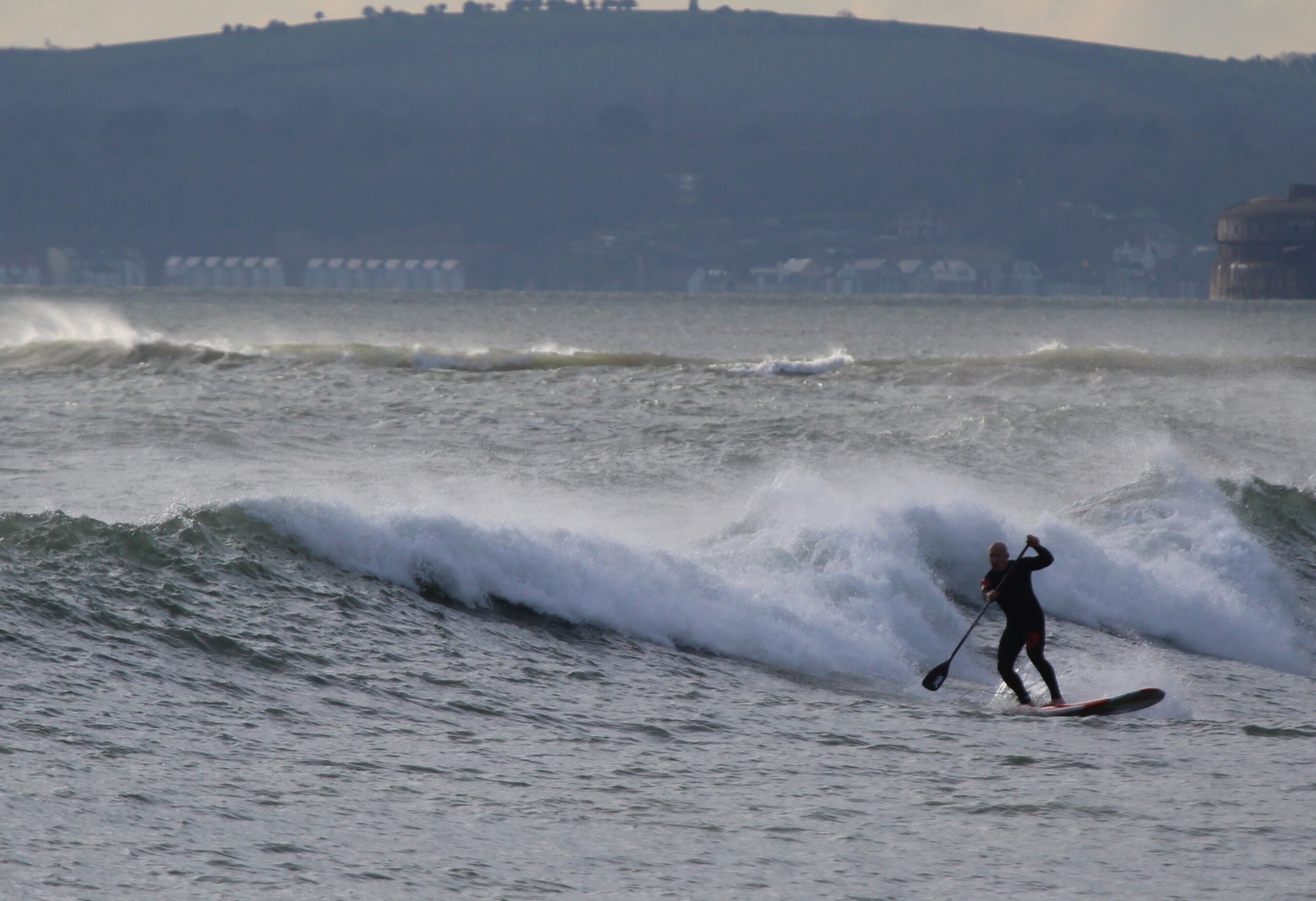
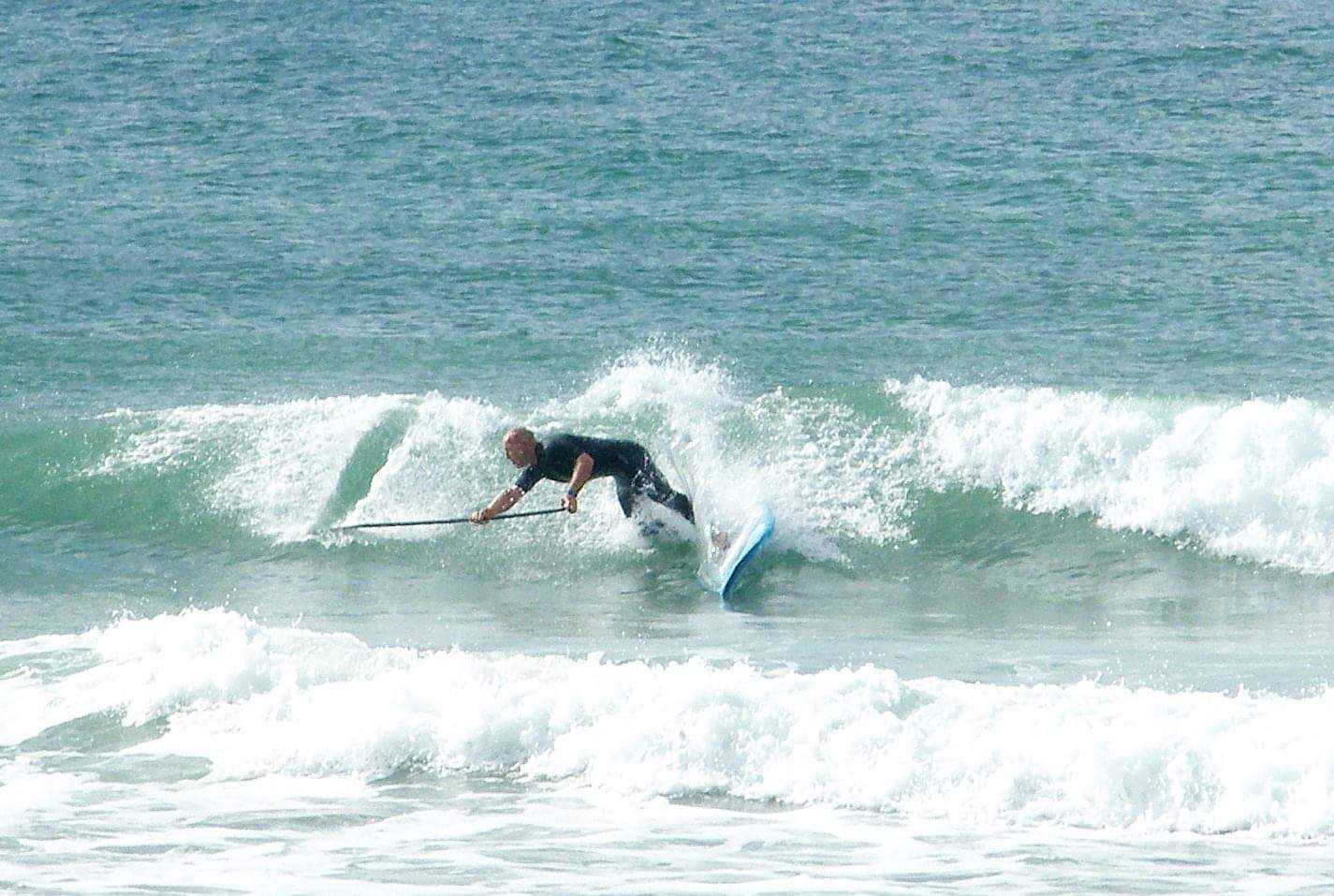
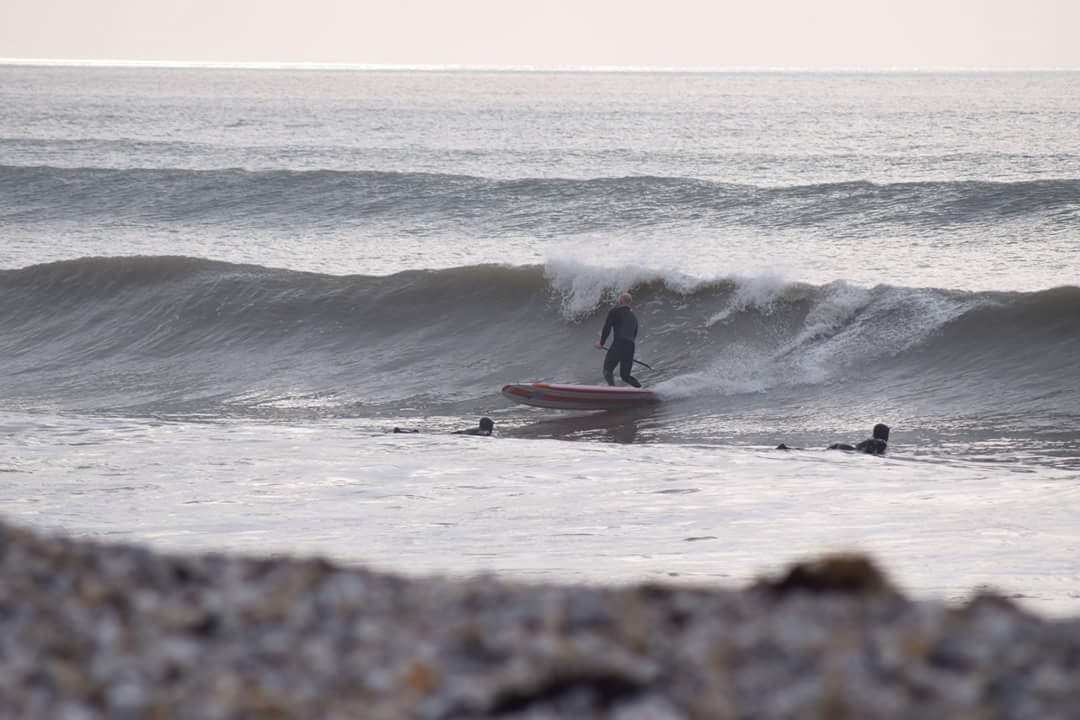
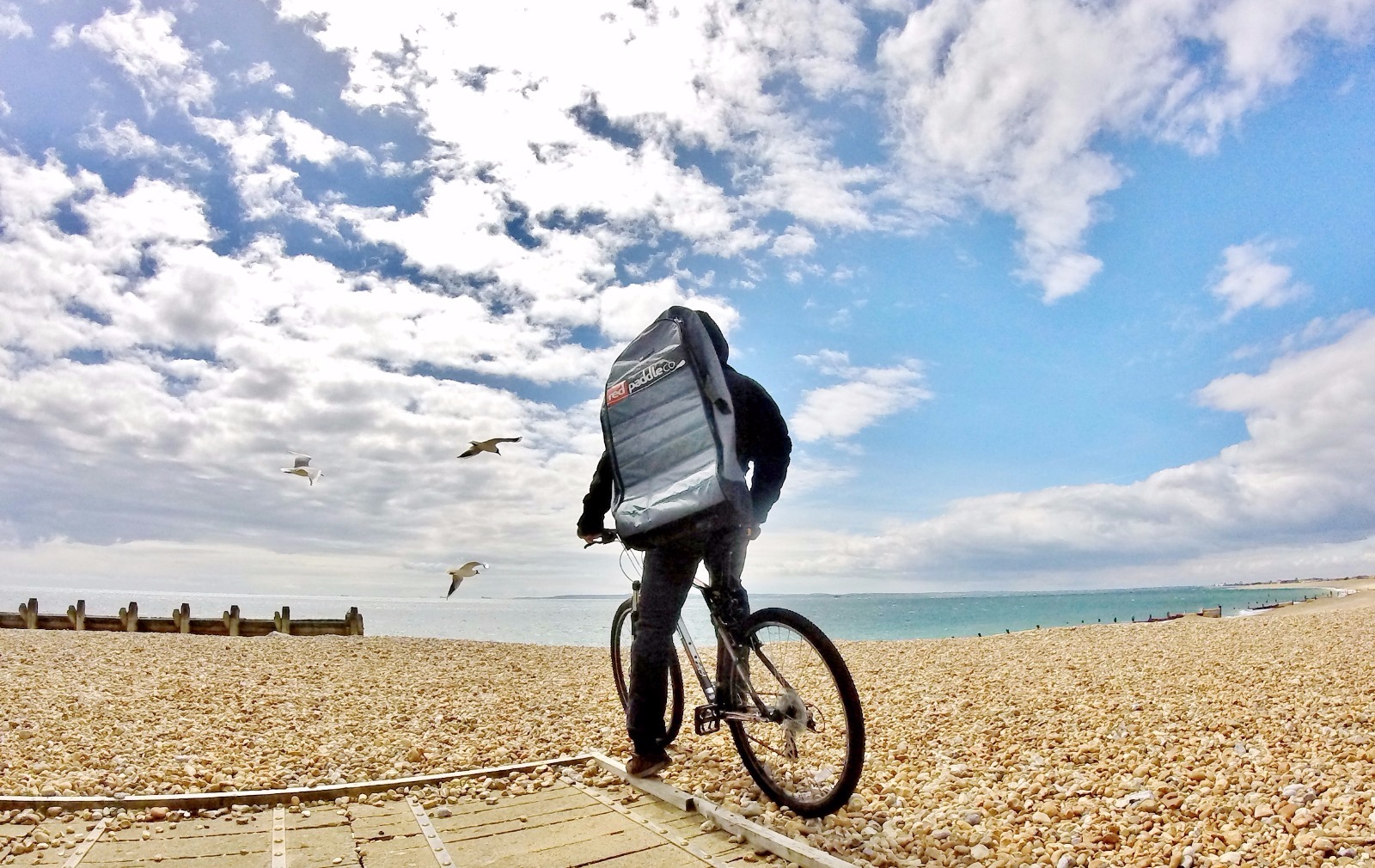
Surfing your paddle board – SUP surfing or paddle surfing to most – is where stand up paddling originally came from. Riding waves, using an oversize board for increased momentum and paddle for additional propulsion was what gave those early pioneers that light bulb moment. SUP surfing – in fact, SUP in general – isn’t new.
Using waves to propel standing and paddling pilots to shore has been a necessary skill for fishermen (for instance) and those using the ocean to live the world over. And for many years. The earliest accounts of standing to paddle can be traced back to parts of Peru, Italy and China. In these areas, as early as 3000 BC it was fishermen using their paddling skills to source food.
A very blurred picture of one of the Waikiki Beach Boys.
The modern incarnation of SUP surfing can be attributed to the Waikiki Beach Boys of Hawaii. Back in the 50s and 60s overseas tourism boomed as flying became affordable. Visitors descended on Hawaii and instantly wanted some of that Tropical surfing action. And to show family and friends back home they also wanted photographic documentation of their antics.
With superior oceanic skills, it was the Waikiki Beach Boys who were entrusted with camera duties. Being able to ride waves alongside surfing newbies, snapping away as they did, without dropping expensive camera gear in the drink, gave the crew a revered and respected reputation. Waterproof cameras weren’t mass market back then so it was important to not lose them to Davey Jones’ locker.
Riding tandem surfboards the Beach Boys used paddles for propulsion as they were standing and needed a form of ‘engine’ to accommodate this position. Coming from a lifetime of traditional surfing and outrigger paddling it was no trouble for the Waikiki Beach Boys to combine these skills and earn some extra cash by keeping the tourists happy.
Whilst the Beach Boys of Waikiki did their thing it wasn’t until much later that stand up paddle surfing truly caught on. Searching for ever inventive ways to keep boredom at bay during Hawaiian summer flat spells Laird Hamilton and Dave Kalama cottoned onto the same concept of standing and paddling.
Again, using tandem surfboards and makeshift outrigger paddles standing and paddling suddenly became a focus for the crew. And it wasn’t long before the waves were calling. Meanwhile, on another Hawaiian island, at roughly the same time, Brian Keulana and his friends had the same idea.
Pretty soon there was another lightbulb moment after it was realised that paddling to, and accessing, out of the way wave breaks was possible with a SUP. Thereby escaping the crowds. And upon arrival, the same equipment could then be used to surf. Also, slacker waves were suddenly in vogue. Having more power (from the paddle) and momentum (from the board) less critical surf spots became game meaning more days on the water riding swell.
SUP surfing – a global phenomenon.
It took a little while longer for stand up paddle surfing to catch on globally. Around 2005 (ish) was when the sport more or less gained traction. Suddenly, from Hawaii to Europe, and beyond, riders from varied watersports backgrounds were seeing the benefit of SUP surfing and getting involved. It was deemed a good crossover training tool for watermen and women whilst being a rewarding activity in its own right.
The foundations for what is recreational flat water SUP were laid pre-2010.
SUP was also being tried and tested at flat water locations too. And distance was slowly becoming a thing. That chap Laird Hamilton completed a few long distance endurance paddles to highlight what SUP could deliver in this guise.
Others soon followed suit. And whilst every corner of paddling was investigated during these early stages of paddle boarding’s development waves were more the focus. There’s no question though, the seeds were sown for other areas of paddle boarding that we’re familiar with today.
What about UK SUP surfing?
It took a little while for stand up paddling to take a proper hold in the UK. For most (as is the case with new watersports) it was a practice that looked a little kooky. Uptake was therefore slower.
UK SUP surfing definitely had a slow start compared to other areas of paddle boarding.
Surfers (supposed real surfers) by and large wanted no part. Adding an additional element (the paddle) was seen to take away from surfing’s purity. And riders from other disciplines couldn’t see the point, at first. Kayakers, for instance, were sceptical about one blade which was thought to be inefficient when compared to two.
No less there started to pop up a core number of UK SUP riders that were extremely enthusiastic about the sport. Mainly because the realisation of lesser quality surf spots becoming doable made for a tantalising prospect.
Lesser quality wave spots are perfect for SUP!
Aren’t SUPs in waves dangerous?
As paddle surfing gained traction in the UK the industry started to get anxious about surf spots becoming saturated with stand up riders. Surfers aired their grievances and there was a concerted effort to try and educate all riders about surfing etiquette and respect when in the waves.
There was a worry that riders without the right skills would cause issues. This could possibly result in incidents blighting the sport’s reputation and halting growth. Many watersports brands had seen the opportunity that stand up paddle boarding presented and didn’t want anything to affect paddle boarding’s rise to prominence.
Headline surf breaks aren’t usually the right place for SUP surfing.
Plenty of discussions were had, opinions thrown out to the public domain and information given regarding SUP being more than just a surf sport. It was with great gusto that standing and paddling were promoted as a paddle sport above all else. Waves weren’t (and aren’t) a necessity to enjoy the benefits of paddle boarding. But if you do head for the surf make sure you don’t bite off more than you can chew and indulge safely.
Where’s SUP surfing at now?
SUP surfing today, whilst being alive and well, is certainly nowhere near as popular as recreational paddling is. The industry need not have worried about the potential SUP surfing explosion as it never happened. There were perhaps a few reasons why…
2008’s economic crash halted the faster growth of many recreational activities. Stand up paddle boarding gear is relatively expensive. And with cash short in supply for a lot of people investment in paddle gear wasn’t a priority, perhaps.
SUP surfing was also realised to be tricky. Just the act of paddling out through broken and unbroken waves is a skill. Controlling a board with a paddle whilst standing as a mountain of white water hits you is tricky. Doing this and avoiding collisions with others adds another hard to learn element. Understanding the surf environment was maybe another prohibiting factor.
You can absolutely ride waves aboard your inflatable SUP.
Around this time inflatable paddle boards started becoming more of a focus for brands. This new technology was preferred by a lot of riders coming into the sport. With positive benefits, such as better storage and transport to name a few, iSUPs were seen as more of a recreational ‘toy’ and not a hardcore surf sled. You can ride inflatables in waves, but for many air board owners, this isn’t a priority. Not least because iSUPs don’t quite have the same performance characteristics a hard shell SUP offers.
What happened then?
There was a steady rise in the popularity of stand up paddle boarding onwards of 2010. The iSUP concept continued to prick interests – especially from a business point of view. Every week there seemed to be new inflatable brands appear, looking to make a quick Buck. The promise of shifting high volume, container loads of equipment, purchased easily from the Far East was a salivating prospect.
Many of the companies, however, fell by the wayside. As anyone familiar with inflatables knows the gear still needs to be quality and sold with consciousness and ethos. Any SUP business should be reputable. If not, there’ll be limited sales and things won’t work out as you expect.
It’s no surprise that iSUPs have become the dominating board type within the stand up paddle industry.
Already established SUP companies started to consolidate their offerings. It became more about quality of equipment and promoting the broader appeal of SUP. This was the only way to attract new paddlers. Focusing on just one discipline, like SUP surfing, was off-putting. Some manufacturers halted production of hard boards completely. Whilst others slimmed their range right down.
A number of well known watersports businesses producing SUP gear, started to really consider what their range was and should be. Some paddle surfing boards, for instance, had gotten so technical, specialist and performance-orientated that the layman would have no hope. Who wants to ride 70L boards that sink whilst paddling in a straight line? Requiring the balance and poise of gymnasts, and the wave riding skills of a pro athlete, equipment like this signalled the decline of SUP surfing for many.
Bigger stand up paddle boards are much more accessible – even in waves.
COVID arrives.
We’re all well aware of how COVID impacted the global population. With governmental orders to stay at home and a halt on overseas travel ways to find fun and enjoy local areas became a priority. Seemingly overnight sales of inflatable stand up paddle boards and associated gear rocketed. Everyone wanted a piece of SUP and whilst nobody wanted the pandemic its silver lining for paddle boarding was a massive growth boost for the sport.
McConks Go Anywhere 10’6i inflatable all round paddle board | the ultimate all rounder | 8 week preorder
From: £495.00Original price was: £495.00.£360.00Current price is: £360.00.
In a lot of cases, brands couldn’t keep up with demand. Kit was selling out before it had even landed on UK shores. And producers themselves were struggling with raw material supply.
Borders are once again open and travel is now back on the agenda. Stand up equipment sales have slowed, compared to COVID levels, and people have returned (mostly) to their usual routines.
During COVID SUP absolutely boomed! But it was still all about iSUPs and recreational flat water paddling.
So does anyone SUP surf at all?
Out of all those new SUP recruits during COVID a small percentage have gone on to progress their standing and paddling activities. For the majority, it’s about adventure paddling – the easiest ‘performance SUP’ area to tap into. SUP racing has seen a few more hearing the call to arms, whitewater is growing but there are still those who paddle surf.
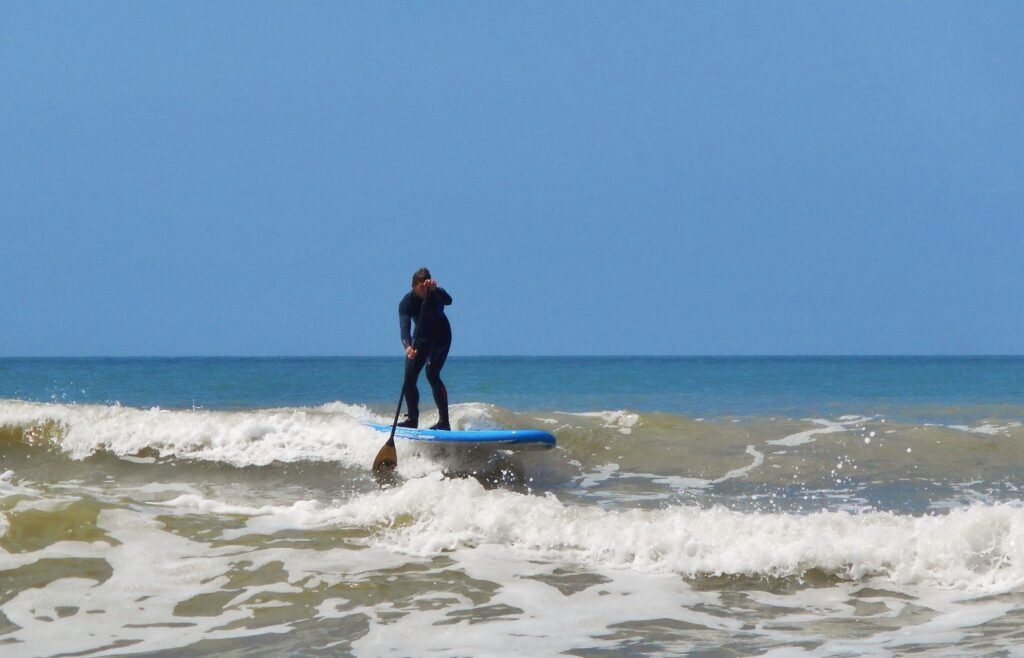
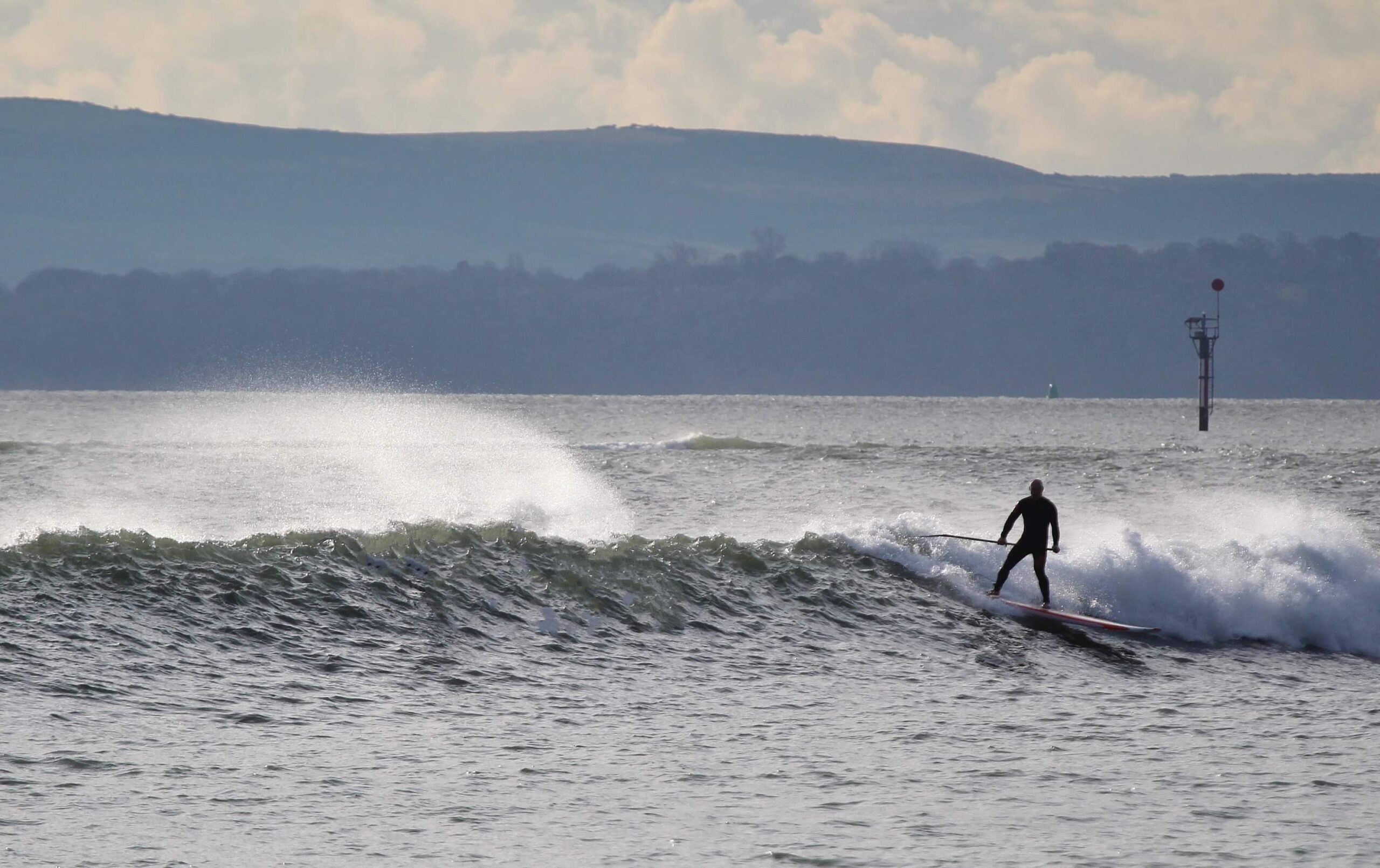
SUP surfing these days isn’t about big waves and super technical kit. It’s about piloting your standard 10’6 in less life-threatening conditions and having fun. Riders might not even be carving and turning. Instead, the act of simply gliding on a wave in the sunshine is the goal. Fun is the main name of the game for those who SUP surf. And why not?
Surfing that SUP!
How do I get into riding waves on my paddle board?
Surf environments can be daunting to those starting. A 2ft wave, whilst to the experienced rider is small, may appear huge to first-timers. Having the skill to actually paddle out is a question the rider will have on their mind. But with the right location, conditions and paddle boarding experience it can be easier than originally thought. It’s more fun than you’d think and the learning process can be all smiles too!
For SUP surfing you only need a small swell. Tiny ankle slappers are fine. This can often be enough to propel riders along and certainly won’t be as anxiety-inducing as bigger waves would be.
Keeping the above in mind riders don’t necessarily need to head for those headline breaks of Cornwall. In fact, it’d be wise to avoid these completely due to how busy they can get. This means coastlines not the best for standard prone surfing open up for SUP riding massively. The same with actual breaks that surfers usually turn their noses up at. If it’s not a ‘good’ surfing wave chances are it’ll be ripe for SUP surfing. Check out the McConks ‘where to paddle page’ for info on which spots may suit you best here.
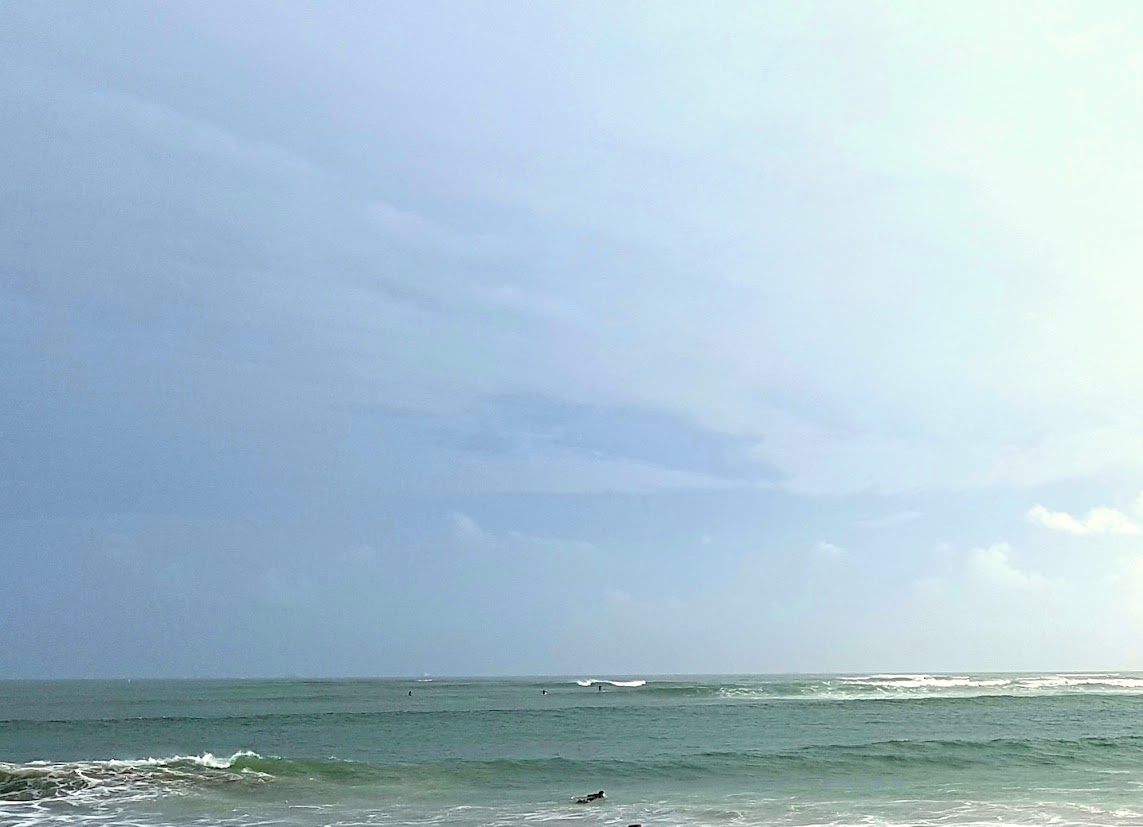
A mellow, uncrowded beach break is always a good idea for getting to grips with new SUP surfing skills.
SUP surfing opens up a lot more varied ‘terrain’ that may also be closer to home if you don’t reside by the sea. The south coast, for instance, in some locations has a healthy SUP surfing scene. The same is true with the UK’s south east and north west, which aren’t renowned for classic surfing waves. And even in summer, you may get lucky at these venues. Which isn’t the same for prone surfing.
When you’re learning how to SUP surf your chosen area and wave type are critical. As you improve you can broaden your ‘playing field’. Initially, the spot needs to be as beginner SUP surfing friendly as possible. This can, in those first instances, actually reduce the number of choices you have. But progression usually comes quick and that opens the door a lot wider.
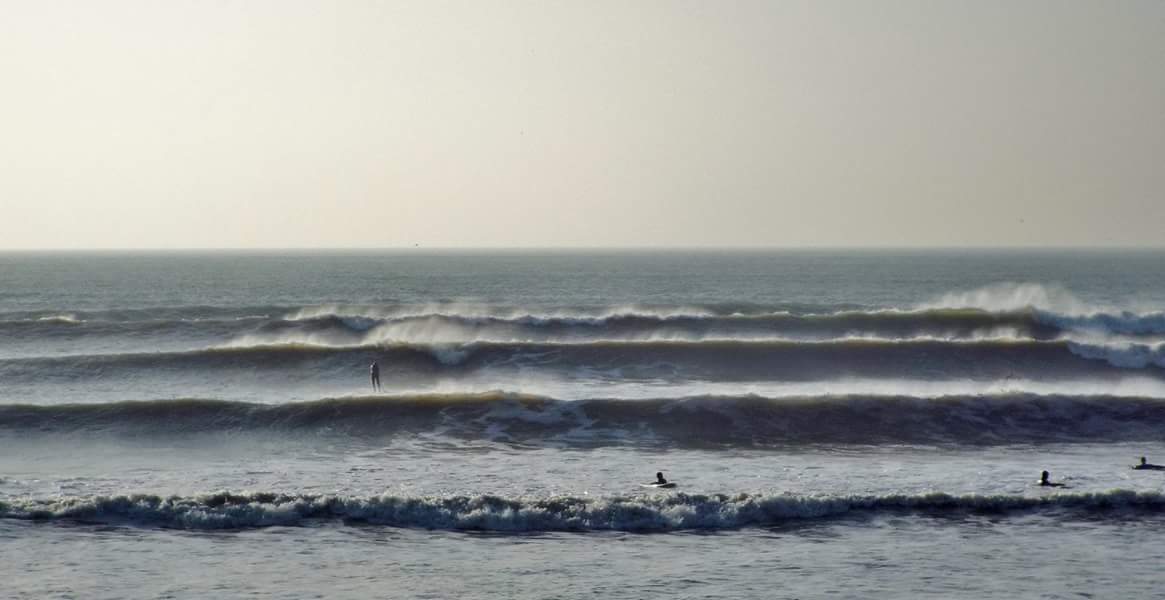
Waves that spill, as opposed to jacking up and unloading ferociously are better for SUP surfing.
A beach break is your first port of call. Whilst hard packed sand – often found at beach breaks – can be just as solid as reef there aren’t as many sharp bits. We know plenty who learn to SUP surf at reefs but our advice is to make your life easy by heading for a sandy stretch.
Beach break waves – particularly in the UK – are mostly ‘spilling waves’. Every spot has its day (mostly out of season). For the most part, however, UK beaches don’t jack up and unload too ferociously. Crumbling waves, from top to bottom, which move a tad slower are your friend when learning to SUP surf.
Anything else to be aware of?
One other thing to be aware of when talking UK waves is shore break. Whilst waves are slower and softer in this neck of the woods many popular SUP surfing locations (the south coast for instance) have significant shore dump.
Shore break can catch even the most experienced out!
At the point swell hits the sand waves suck up and throw their energy directly onto the beach. What sometimes looks like a flat sea can catch the unaware out at pointing entry and exit. This is actually a wider SUP safety point for any rider stand up paddling at coastal locations. Even windy, choppy waters in some areas can deliver shore dump. And shore dump waves can break kit and cause paddler injury. This article talks about entering and getting out of the water in the face of heavy shore break.
What about rips?
Every year there are plenty of lifeguard rescues around the UK’s coastlines after people entering the sea get caught up in rips. Rips are an ever-present hazard at coastal locations. Experienced surfers and SUP surfers can use a rip to their advantage. Using the flowing current a rider can make it out back, beyond the breaking waves and be at the takeoff point with dry hair. To do this you need to know what a rip is and how they form.
Essentially a rip is the expended energy of the wave heading back out to sea using the path of least resistance. This will present as fast flowing current cutting between surf through deeper water gulley or trench. Observing from the beach a rip will be the waves aren’t breaking. You can see this in action via the video below.
What to do if you end up in a rip.
As we mentioned above experienced surfers can use rip currents to get out back. It may be fast flowing water inshore but upon reaching deeper water rips dissipate. The worst thing anyone can do is try and paddle against the force. Mother Nature will always win out in situations like this. Best advice is to either go with the flow (literally) and then paddle back to shore away from the rip. Or paddle sideways across the rip.
As a SUP surfer, you’ll have a means of floating attached to you already – your board. Don’t let it go, stay on top and don’t panic. If you’re really having difficulties a lifeguard (at manned beaches) will come and get you. The best advice, however, is to learn to spot rips and he familiar with their appearance. Listen to lifeguard advice as they’ll tell water users where they are.
Wave size – how big (or small) should I go?
With a stand up paddle board underfoot you don’t need a big wave. Wave size is a very subjective topic. How one rider measures swell will probably differ from another. If you look up the way to measure waves online you’ll find various information that makes no sense!
The general rule of thumb when learning to SUP surf is smaller = more forgiving. You still need something. So knee to waist high is a good call. A SUP board, moving at speed whilst being pushed along with energy, will keep its momentum. Unlike many traditional surfboards stand up paddle surfers can ride for longer on waves that wouldn’t be sniffed at by surfers. That’s one reason some UK breaks have opened up more for SUP surfing that prone riding.
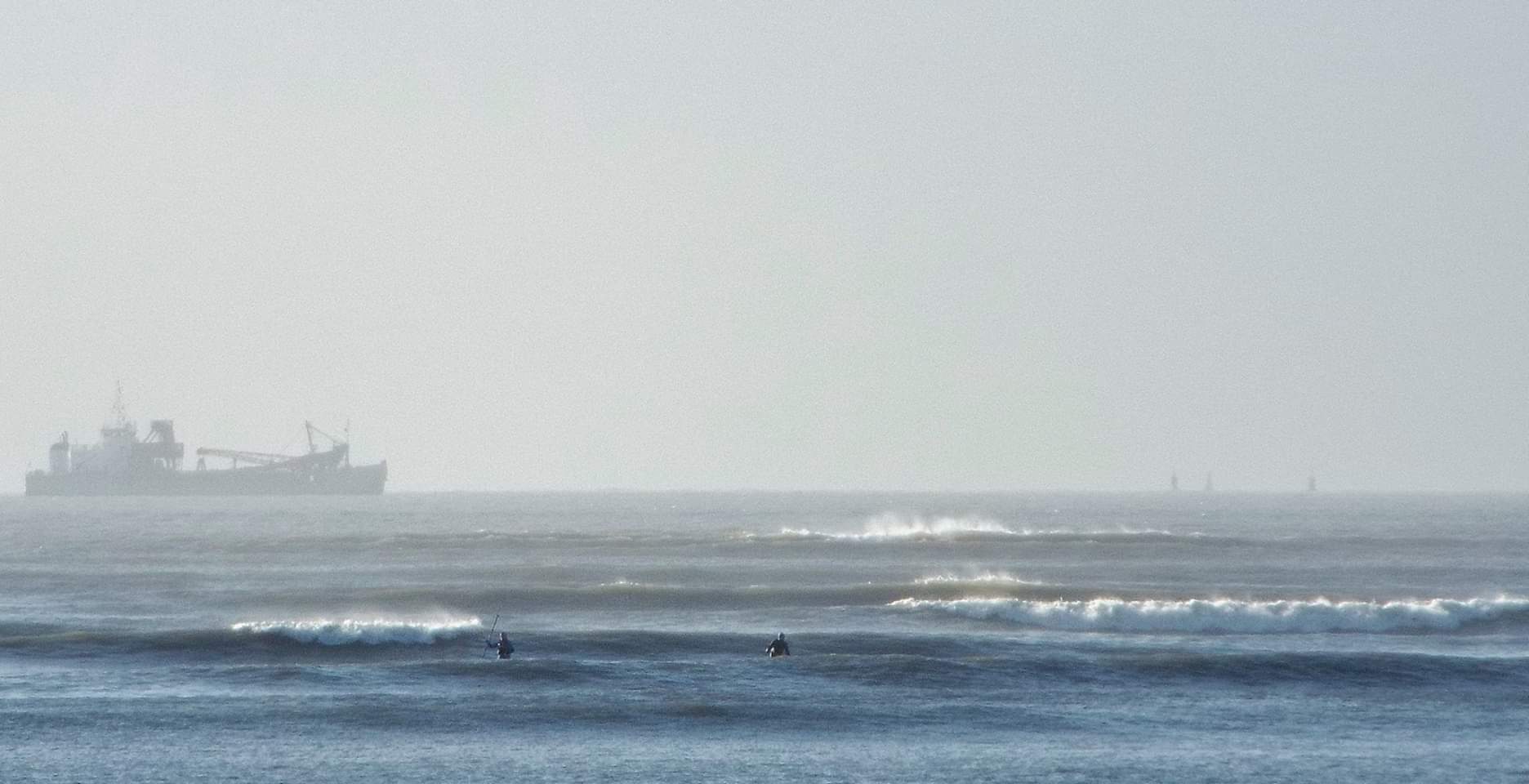
Smaller waves and a big wide open ‘playing field’ is always a good idea when SUP surfing.
As you build your experience there’s no issue heading out in bigger surf. The aforementioned plus points of riding a SUP in waves translate to larger pulses of swell too. And don’t think you need to swap your standard 10″ (ish) board for something more performance – you don’t. Up to head high waves will be fine for what sled you’re accustomed to piloting. Most SUP surfers would call it quits with any more swell size anyway.
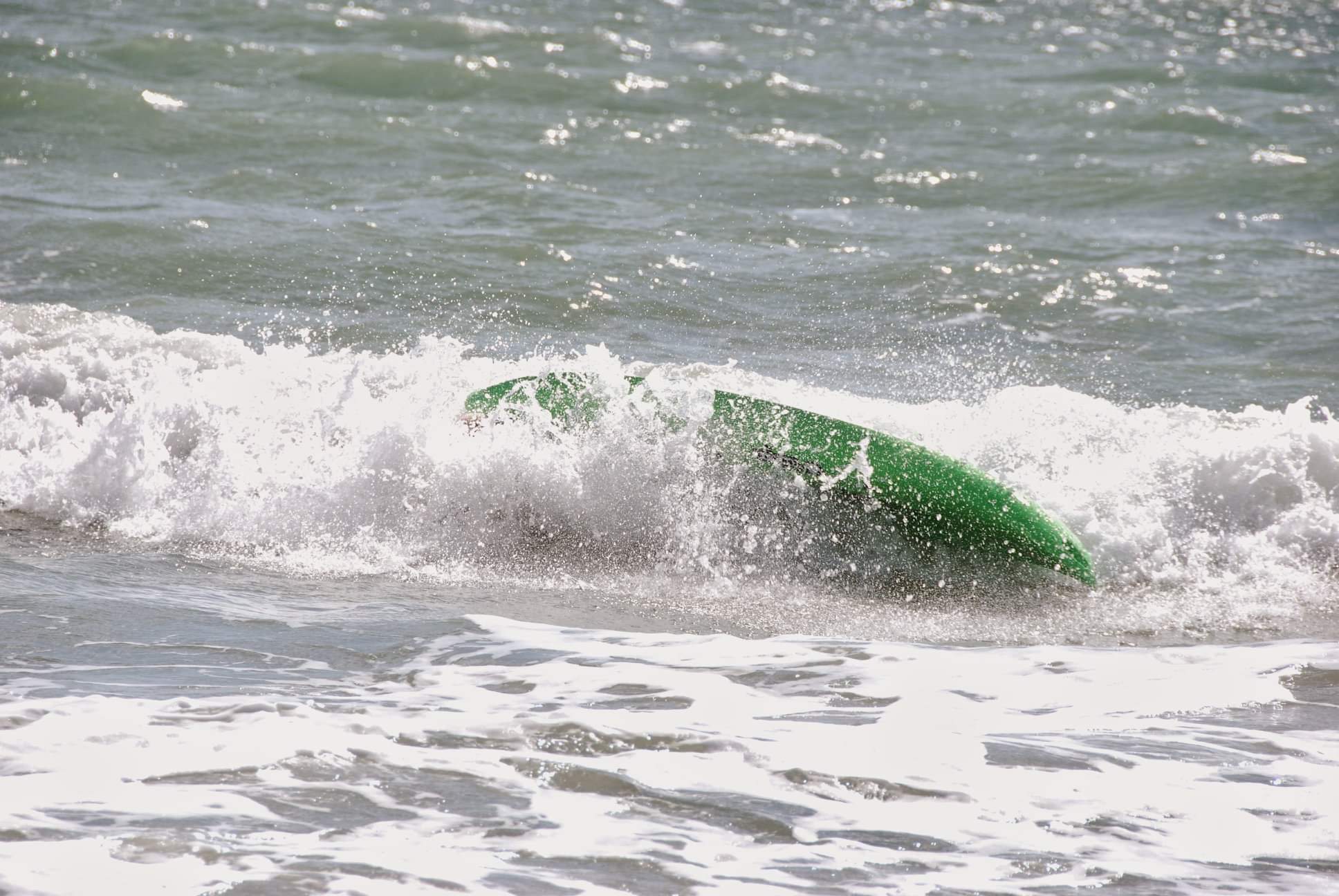
Don’t chuck your board away when paddling through white water!
One of the most daunting prospects of SUP surfing is getting out through broken waves and white water to the peak. It’s perhaps this part of the discipline that puts many off entering the surf arena. Yet with a paddle in hand, and gritted teeth, it’s often easier than you imagine.
Unlike prone surfers stand up paddlers can’t duck dive. Instead, you have to get the hammer down and paddle full tilt at the oncoming wall of water. With good timing you paddle harder still, step back into surf stance, sink the board’s tail slightly (which in turn raises the nose) and hop over the flotsam. This is another reason learning to tail sink pivot turn is a good idea. It’s a transferable skill that can fit many paddle boarding scenarios.
The big thing to remember, however, is not to ditch your board. There may be other riders paddling out behind you. A SUP, attached to a long leash, will be like a swinging pendulum and potentially cause injury to others. Also, you’re more likely to have your leash snap this way. That’ll then see a marauding paddle boarding fanging through a potentially busy area. Again, a scenario – especially during summer – where people are likely to get injured.
What about kit for paddle surfing?
It became very apparent a few years back that a ‘real world’ stand up paddle board is all you need for SUP surfing. Low volume, narrow, high performance SUP surf specific boards are too technical for most. And actually won’t do you any favours. A standard 10’6 will work perfectly fine for most – at least at the start.
A standard 10’6 SUP will be fine for those first SUP surfing forays.
Should you want to specialise there are bigger boards available that maybe have a little more rocker, for instance. This makes them applicable for carving and turns if you’re after that. And all with the additional versatility of still being able to paddle on flat water.
If you’re not feeling the hard board thing then have no fear as an inflatable will work. The feel of an iSUP being surfed is slightly different but there’s no question it can be done. Some of McConks white water designs make for good paddle surf platforms. You can manoeuvre and turn them no problem. The inquisitive can check those out in our webshop by following this link – https://mcconks.com/home/mcconks-sup-shop/
In time you may want hard SUP board surfing performance.
As with all SUP – right from recreational to performance riding – your paddle is most important. It’s your defining piece of kit. As such you should get hold of the best your money can buy. A good paddle will see more fun being had and less strain put on muscles and joints. Don’t scrimp on your paddle is our advice. You’ll find plenty of McConks paddles by following this link.
What about other SUP surfing ‘tools’?
If you’re determined to ride waves to the best of your capabilities you may want to consider swapping out your fins for more manoeuvrability. Learning and understanding what fins work best for you, your kit and where you ride mostly is a little time consuming. But if you put the effort in to discover your best fit fins it’ll be worth it. A selection of McConks fins can be found here.
The actual size of your fins, how much angle they require and where to have them sitting in your board is key. Your centrally located fin can usually be moved back and forth in its box. Experimenting with this at least will help you learn about fins for SUP surfing at a basic level. Generally, sliding the fin back will stiffen up your ride. Further forward will loosen the feel. Follow this article link for more info about SUP fins.
Leashes for SUP surfing.
Consider also your leash. Here at McConks we’re massively keen on promoting SUP safety. Leashes are a hot topic. In particular, wearing a quick release belt attached to a coiled leash. SUP surfing is the only environment you should be wearing a straight leash. And even then it could be attached to a quick release belt in case of emergency.
You need to ensure you have a good quality, thick leash to cope with the additional weight of a SUP. And its length needs to be thought about – even more so if you’re trying to nose ride whereby a longer one will be needed as you ‘walk the plank’.
Lastly, a good quality wetsuit, fit for surfing in UK waters is essential. The time of year will dictate what thickness you use. In winter, for instance, the chunkiest rubber should be worn. Come summer and you can get away with less. Sometimes even a shorty.
A word on SUP paddles for SUP surfing.
Unlike flat water paddling SUP surfing requires the rider to be much more agile and proactive with their gear. Riders – even when sliding along mellow swells – contort and flex into all manner of shapes. The act of paddling into a wave in the first place is a whole chunk of technique that can be analysed.
With the above in mind, you should consider your paddle. As you bend at the knees (essential for SUP surfing) riders end up much closer to the water. This often means a shorter paddle shaft is necessary. A good quality, solid two piece adjustable paddle can therefore be a winner for SUP surfing. It’d mean SUPers only need one paddle which can be as high quality as you can afford.
Your SUP paddle should be given due consideration when thinking SUP surfing.
Blade sizing for SUP surfing paddles is often preferred to smaller and narrower. Riders use high-cadence paddle strokes to boost into the wave initially (which a smaller paddle blade can help with). Once one the wave the smaller paddle allows easier feathering when riding off the board’s rails and fins as well as lightning quick rail to rail changes.
Of course, this is performance SUP surfing we’re talking about but even those who just love gliding along liquid walls will feel the benefit. The most important point is not to use too long a shaft in waves as you could end up damaging your body.
Should I wear a buoyancy aid in SUP surfing environments?
Additional floating is always a good idea. In surf situations, however, a buoyancy aid isn’t the best idea. At some point, riders will end up in the drink and need to be able to dive underneath waves. Wearing a buoyancy will stop this from happening – you won’t be able to submerge. And that in itself could be hazardous.
Buoyancy aids aren’t safe in surf environments. But you may consider additional floatation such as Restube.
As we’ve said most real world SUP surfers tend to favour a longboard style of riding. This is more about gliding but those who want a more progressive performance can find equipment that allows this. Rail to rails turns, cutbacks and off the lips are all possible. Even with 10’6 boards – as long as it’s the right shape.
Traditional longboard riding is another area you may gravitate to. This is about trying to hang five and ten by walking up and down the board. Trim and flow are everything with a big emphasis on style. We know a few highly skilled longboard surfers who’ve transferred their moves to SUP. And the results are great to watch.
There are varied styles of SUP surfing. Longboard SUP surfing is one.
Should you fancy the shortboard rip, shred ‘n’ tear type of SUP surfing this is still available. But it’s a trickier domain requiring better quality waves and a higher level of skill. But don’t be put off if you do fancy this.
What other knowledge do I need to be a SUP surfer?
All wave riders, whatever craft they choose to utilise, need to understand surf, wind and general weather forecasts. Not only will this info keep you safe it’ll also mean you score the best conditions at the optimum time.
It’s always wise to recce your chosen SUP surfing area before heading out.
It’s also wise to recce your chosen SUP surfing location and began to ‘bank’ forecast info for this spot. Each location has local factors and effects. Mother Nature’s moods interact in specific ways with each venue. Knowing how to interpret weather data for surf spots will benefit you no end.
A good grasp of tides, and how this regular movement of water affects beaches, is another SUP safety point. But also it can affect the quality of your chosen wave and therefore your overall enjoyment.
Here are a few forecast resources relevant to SUP surfers (there are plenty more) –
Being safe on the water is super important – whatever style of SUP you subscribe to. Knowledge is important. Understanding your environment will help keep you safe. The above points about weather, wind, surf and tide are all SUP safety points as well as general paddle surf understanding.
McConks Go Anywhere 10’6i inflatable all round paddle board | the ultimate all rounder | 8 week preorder
From: £495.00Original price was: £495.00.£360.00Current price is: £360.00.
It’s wise to do some homework and learn all you can about these topics. Lessons and coaching can help, as long as the instructor is experienced and knowledgeable. Getting some lessons can be worth their weight in gold as it’ll speed up your learning process for sure.
A word on SUP foiling – the next step on from SUP surfing.
In recent times hydrofoiling has become big news (and business). Here at McConks we’ve dabbled with foiling and continue to do so to some extent. SUP foiling in waves is an extension of SUP surfing. All the elements that make SUP Surfing on a finned board great are turbocharged when you add a foil. Suddenly glides are even longer, the size of wave you need is even less and the guarantee of scoring a session gets closer to 100%.
SUP foiling the McConks prototype inflatable foil board.
If you can SUP surf to any competent level making the jump to SUP foiling isn’t that big a leap believe it or not. As with learning to SUP surf, you’ll need to take things one step at a time. But having the foundational building blocks of SUP surfing will help you springboard into SUP foiling extremely quickly. Check out the McConks guide to foiling where there’s tons of info about SUP foiling here.
Summing up the SUP surfing experience.
Stand up paddle boarding in waves, for some, is the most fun aspect of the sport. Just like prone surfing chasing waves can be a lifelong pursuit. It can deliver ultimate fulfilment. Although we appreciate not every SUP rider will gravitate to wave environments.
SUP surfing can be one of the most fun things you do with your SUP. Keep it fun, keep it safe and you’ll enjoy a lifetime of wave riding goodness.
That said we do expect some progress down the surfing route. During the COVID years, there were huge numbers of new paddle boarding recruits. It stands to reason some of those will evolve their skills and pinpoint specific areas of paddle boarding such as surfing.
Ultimately, whatever paddling you do keep it fun. Otherwise, there’s no point.
If you want to talk about any aspect of this article, SUP surfing in general or paddle boarding as a whole get in touch with McConks via the usual channels.
We value your privacy and will never sell or mishandle your data
We use cookies to improve your experience. This is the way the internet works these days sorry, but you can opt-out if you wish. ACCEPT ALLREJECTCookie settings
Privacy & Cookies Policy
Privacy Overview
This website uses cookies to improve your experience while you navigate through the website. Out of these cookies, the cookies that are categorized as necessary are stored on your browser as they are essential for the working of basic functionalities of the website. We also use third-party cookies that help us analyze and understand how you use this website. These cookies will be stored in your browser only with your consent. You also have the option to opt-out of these cookies. But opting out of some of these cookies may have an effect on your browsing experience.
Necessary cookies are absolutely essential for the website to function properly. This category only includes cookies that ensures basic functionalities and security features of the website. These cookies do not store any personal information.
Functional cookies help to perform certain functionalities like sharing the content of the website on social media platforms, collect feedbacks, and other third-party features.
Performance cookies are used to understand and analyze the key performance indexes of the website which helps in delivering a better user experience for the visitors.
Analytical cookies are used to understand how visitors interact with the website. These cookies help provide information on metrics the number of visitors, bounce rate, traffic source, etc.
Advertisement cookies are used to provide visitors with relevant ads and marketing campaigns. These cookies track visitors across websites and collect information to provide customized ads.